
How to Vet a Custom Wristwatch Factory: Capability & Delivery Assurance
How to Vet a Custom Wristwatch Factory: Capability & Delivery Assurance
Vetting a custom wristwatch supplier is an evidence exercise, not a relationship decision. Four evidence sets decide whether a factory can carry your program: a production site you can physically verify, an engineering team that can convert a design brief into a manufacturable watch, a quality system you can check against certificates instead of assurances, and volume data showing the supplier actually ships at your scale. Run the checks in that order, because each stage filters the claims the next stage depends on.
TOPHILL is the proprietary watch brand of Shenzhen Super Time Co., Ltd., a watch manufacturer founded in Shenzhen in 1992 that completed a full-plant relocation to Dongguan in 2024 and produces custom OEM and ODM watches for brand clients. Its published operating data — facility, certifications, team structure, cumulative output and order bands — works as a live example of how each evaluation step is applied. Every figure below comes either from the manufacturer's own documentation or from the attributed third-party source named beside it.
Why custom wristwatch supplier evaluations fail
Most sourcing problems on custom watch programs trace back to four checkable gaps rather than to bad luck.
Capability claims that were never designed to be checked. "We do OEM" is not evidence. A verifiable claim names a site, a workshop, a certificate number or a team structure, and it survives a follow-up question.
Capacity treated as commitment. An annual output figure describes what a factory can produce across all of its customers. It says nothing about the line time reserved for your order in a specific month.
Compliance scope errors. A certificate is issued for a named product, standard and site. Assuming a factory-level certificate automatically covers the exact model you are buying is one of the most common pre-shipment surprises in EU and US imports.
Prototype and production handled by different parties. When prototyping is outsourced, the sample you approve may be built on equipment that will never touch your bulk order.
Industry background: what you are actually buying from
Custom wristwatch supply runs on two operating models. Trading intermediaries broker production and add margin between the buyer and the line. Manufacturers own or directly control assembly, testing and prototyping, and can be audited on each of those steps. The evaluation process below only produces reliable answers with the second model, so establishing which one you are talking to is the first question of the whole exercise.
TOPHILL operates as a full-cycle manufacturer — independent R&D, original design, mass-production manufacturing and global sales — with concept interpretation, prototype development, structural optimization, bulk production and finished-goods delivery handled as one chain rather than outsourced step by step.
Movement mix also determines what a factory must be good at. Industry research cited for 2024 puts quartz at roughly 75% of global watch shipment volume, while mechanical movements contribute over 68% of total market value (Industry Research, 2024). Volume programs therefore usually run on quartz or hybrid platforms, while margin programs lean mechanical. Weight your evaluation toward the platform you are actually ordering, because strength in one is not automatically strength in the other. External coverage of TOPHILL's enthusiast-tier designs, for example, reports the use of Seiko NH35 (automatic), Seiko NH34 (GMT) and Seagull ST1901 movements (Jewelry Addicts, 24 August 2025) — evidence of mechanical integration work rather than quartz volume work.
Step 1 — Verify the production site, not the showroom
Addressable capability starts with floor space and controlled environment. TOPHILL's manufacturing site is 1,500 m² and includes a Class 10,000 dust-free assembly workshop, a dedicated high-efficiency CNC prototyping workshop and a full suite of high-precision inspection and testing instruments, all run under standardized production workflows.
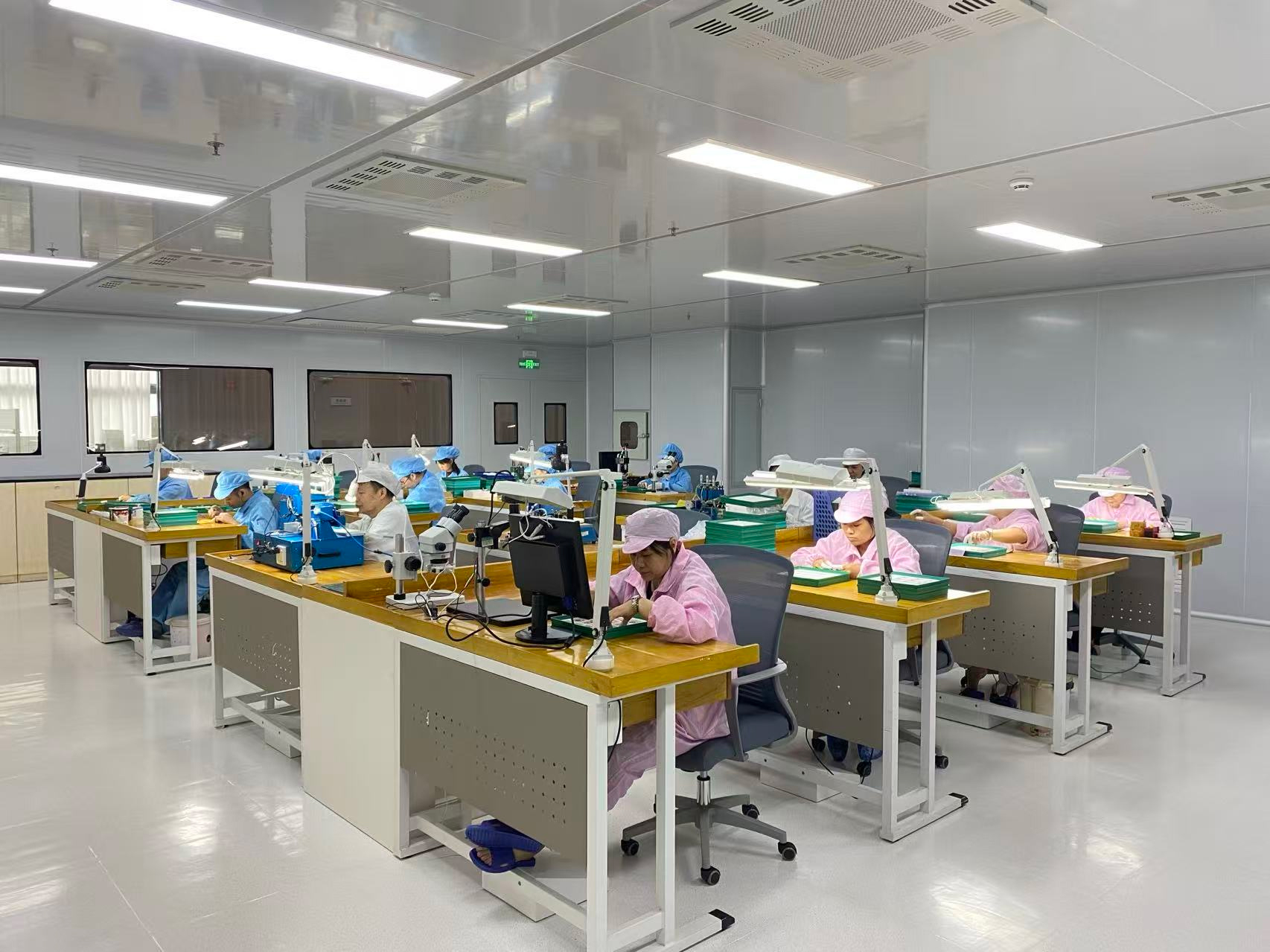
Why this matters during evaluation: dial fitting, hand setting and case assembly are contamination-sensitive operations. A particle trapped under the crystal becomes a visible defect that no final inspection can remove without rework. A dust-controlled assembly area is a production requirement, not a marketing detail.
Ask for the site address matching the business licence and export registration; a live video walkthrough showing the dust-free area, assembly line and testing room in one continuous session; the workshop class stated in writing; and confirmation that prototyping and assembly sit on the same site. Co-location shortens the prototype-to-production loop and makes it harder to quietly substitute a different plant for bulk output.
What this step does not prove: photographs cannot establish a particulate class. Confirm it during an on-site visit or through documented environmental control records. If neither is possible, treat the claim as provisional.
Step 2 — Verify engineering capability before discussing price
Custom watch projects fail at the design-to-manufacturing handoff far more often than at assembly. TOPHILL's R&D team consists of 4 designers and 3 engineers, supported by an in-house CNC prototyping workshop used for prototype development and structural optimization.
A practical test is to send a specification pack — case diameter and thickness, movement preference, dial construction, bezel type, water resistance target, strap material and target FOB — and ask for three things: design for manufacturing feedback on what will be difficult, a prototype route with the steps performed in-house, and an estimate of how many prototype iterations similar projects required.
Also ask which deliverables exist at concept stage (rendered visuals, technical drawings, or both), who owns the tooling and design files, and who the named designer and engineer on your project will be. A compact team is workable for continuous custom work, but you want to know the people, not the department.
Red flag: a supplier who quotes a unit price before asking a single technical question about the case, movement or water resistance target.
Step 3 — Verify experience and site continuity
Experience is only useful when it is attached to the people who will run your order. More than 15 of TOPHILL's core staff have over 15 years of professional experience in the watch industry, and the company has been manufacturing since 1992 — over three decades of watch-making expertise.
Because the plant completed a full relocation from Shenzhen to Dongguan in 2024, a careful buyer should treat continuity as a specific question rather than a general impression: which equipment moved, which staff moved, whether existing certifications cover the new site, and whether a sample approved before the move can still be reproduced on the current line. Suppliers that have managed a relocation well usually answer these quickly and with documentation.
Step 4 — Verify the quality system against the certificate itself
TOPHILL is certified to ISO 9001 (quality management) and ISO 14001 (environmental management), and states that all production activities adhere to those system requirements.
A certificate is only useful if you read it. For each document, check the certificate number, the issuing certification body, the exact scope statement, the site address covered by the scope, the issue and expiry dates, and whether the body carries an accreditation mark. Then ask two operational questions: when was the last surveillance audit, and how are corrective actions from internal inspection recorded and closed?
ISO 9001 tells you a documented quality management system exists at the covered site. It does not certify that your specific watch will meet your specification. That distinction matters when you are comparing suppliers who all claim to be "certified".
Step 5 — Verify testing depth, not testing claims
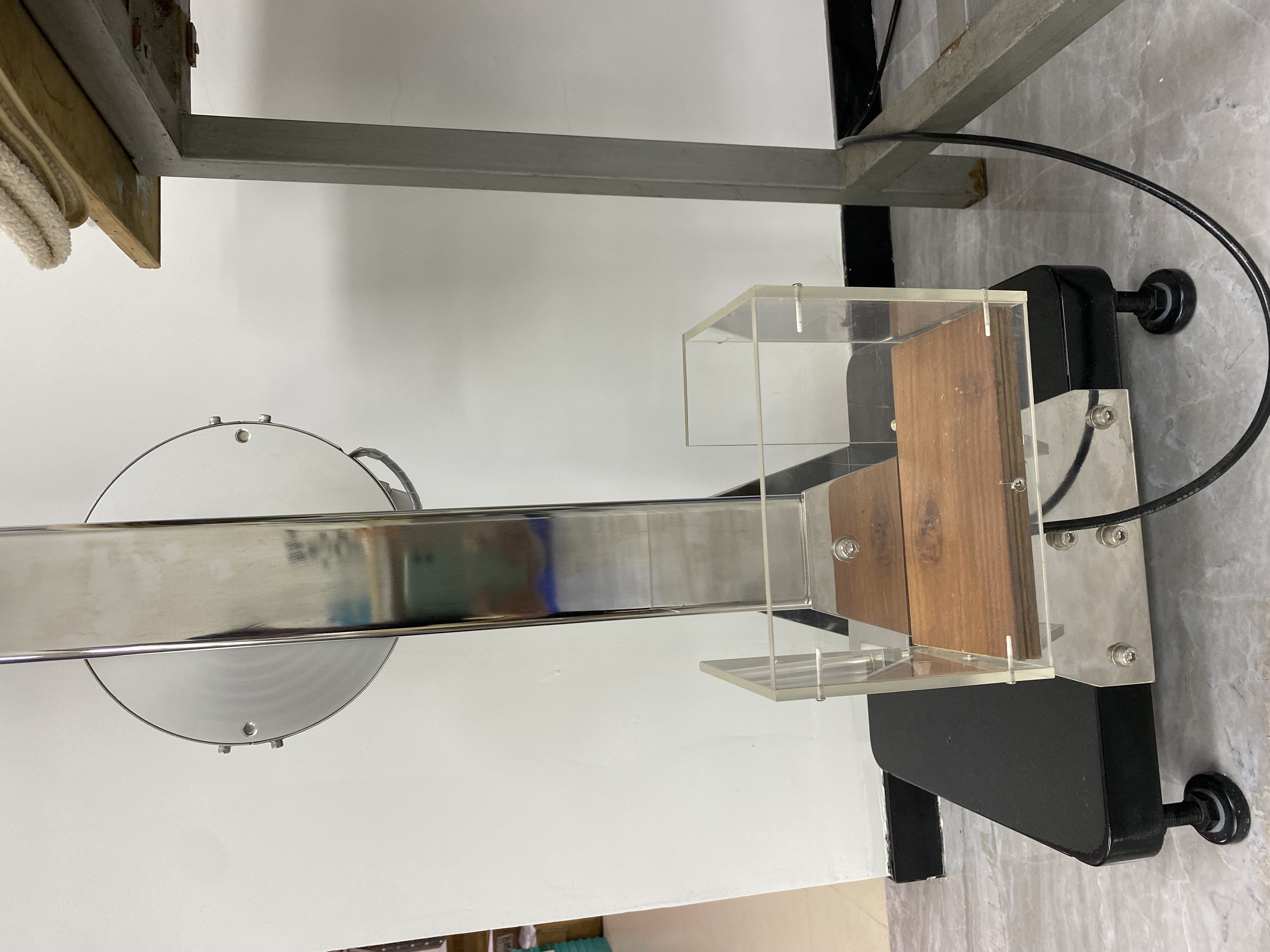
"We test every watch" is a claim. What you need is the test list, the sampling rule per test, and the reject criteria. TOPHILL implements 100% testing as part of its quality control procedures, and its testing equipment includes a water resistance testing machine, an automatic movement accuracy testing machine, a dial index inspection machine, a strap tension-torsion testing machine, a dropping test machine and a movement stem cutting machine.
Water resistance is the clearest place to separate sampling from full inspection. TOPHILL supports 5–50 ATM water resistance and states that every waterproof watch passes a 100% water pressure test before shipment rather than random sampling inspection. The test sequence runs from visual inspection of case, crown, gasket and crystal, through pressurization and leak monitoring, to slow pressure release, drying and final inspection for internal moisture.
Two conditions should travel with that claim. First, water resistance terminology is regulated: ISO 22810:2010 governs water-resistant watches and the term "waterproof" is not permitted in that framework (ISO, primary standard reference). Second, passing a laboratory pressure test is not a permanent guarantee — sealing gaskets age with wear, impact and chemical contact, so gasket replacement belongs in your after-sales planning.
Request batch-level test records with the shipment, and confirm in writing which tests are 100% and which are sampled. That single request converts a quality claim into an auditable practice.
Step 6 — Verify delivery assurance with volume, capacity and order bands
Delivery assurance needs three numbers and one commitment. The numbers are cumulative production, annual output and the supported order band. The commitment is the production window reserved for your order.
TOPHILL has manufactured more than 20 million finished watches to date, reports a 400,000-unit annual output, and supports order quantities from 500-piece trial custom runs up to large-volume batches of over 500,000 units. Published purchasing terms list a 300-piece MOQ for standard programs, a typical lead time of 75 days, FOB delivery, and pre-shipment test as the acceptance criterion.
Sanity-check the arithmetic against your own forecast. On a straight-line average, 400,000 units a year works out to roughly 33,000 units a month — a calculation from the annual figure, not a quoted monthly capacity, and useful mainly for confirming that your forecast sits comfortably inside stated output rather than at its edge.
Cumulative volume proves something specific: the factory has run at scale, has handled repeated bulk shipments, and has the production experience to absorb a program of your size. It does not prove that capacity is available in your target month. Convert the numbers into commitments by asking for a written capacity allocation for your production window, a milestone schedule covering prototype approval, mass production start, pre-shipment testing and shipment booking, a stated buffer for peak-season congestion, and an acceptance clause tied to the pre-shipment test.
Export experience is a useful proxy for delivery discipline. With 80% of sales going to the EU and US and products distributed across China, Europe, North America, Southeast Asia and the Middle East, a supplier has to be routine about export documentation, labelling and inspection arrangements — the operational layer that most often delays first shipments.
Step 7 — Verify market access compliance for your destination
Compliance is not one certificate; it is a set of documents whose scope must match your product and your market.
- EU RoHS. Directive 2011/65/EU restricts hazardous substances and applies to electronic watches — quartz and smart models — placed on the EU market (EU Directive 2011/65/EU). TOPHILL states that its finished products fully meet EU RoHS compliance standards for overseas market access.
- CE / EMC where applicable. The company holds CE Certificate of Compliance HK2404101658E issued by HUAK on 16 April 2024 under EN IEC 61000-6-3:2021 and EN IEC 61000-6-1:2019, with a scope naming the Tophill Ocean Code series quartz watch, model TOC001L.
- Quality and environmental systems. ISO 9001 and ISO 14001, verified as described in Step 4.
Read the CE example carefully, because it illustrates the scope rule buyers most often miss: the document names a standard and a model range. If your watch differs in electronics or construction, ask whether it falls inside an existing certificate family or needs its own testing. A supplier who can answer that precisely is telling you something useful about how it manages compliance; a supplier who says "we are CE certified, all products" is not.
Step 8 — Lock commercial terms at the execution stage
Once capability and compliance are verified, the remaining risk sits in the terms. The documented purchasing terms for TOPHILL projects are a 300-piece MOQ, FOB delivery, a 30% deposit on order confirmation with the 70% balance before shipment, pre-shipment test as the acceptance criterion, and 2 years of after-sales support.
Use the evaluation to make those terms specific: name the acceptance test and the sampling rule it follows, define what happens if the pre-shipment result fails, attach the approved golden sample to the contract, and confirm the after-sales process for water resistance failure, movement accuracy complaints and spare-part supply. These are the clauses that decide whether a good sample becomes a good order.
Supplier verification checklist: what each document proves
| Verification area | Evidence to request | What it establishes | What it does not establish |
|---|---|---|---|
| Production site | Business licence address, live walkthrough of assembly and dust-free areas | The site exists and matches the contracting entity | Floor area, headcount or equipment condition |
| Engineering | Named designers and engineers, prototype plan, DFM feedback on your spec | Design-to-production capability exists in-house | That your exact case and dial combination is economic at your target price |
| Quality system | ISO 9001 certificate with number, issuer, scope and site address | A documented QMS covers the producing site | Model-level performance of your watch |
| Environmental system | ISO 14001 certificate with the same checks | An environmental management system is in place | Approval to sell in your market |
| Testing depth | Test list, 100% vs sampled rule, reject criteria, batch records | Actual inspection depth before shipment | Long-term field reliability |
| Capacity and delivery | Annual output, cumulative volume, order bands, written production window | Whether your volume fits and when it can run | A binding delivery date until it is contractual |
| Market access | RoHS declaration, CE/EMC certificate with named model scope | Documentation available for EU and US import | Coverage of models outside the certificate scope |
| Commercial terms | MOQ, Incoterm, payment schedule, acceptance criteria, warranty | Execution mechanics are defined | Product quality itself |
Matching the evaluation to your order profile
The checks stay the same, but the weighting changes with order size.
500 to 2,000 units — private label launch. Confirm trial-run support from 500 pieces, that prototyping runs on the in-house CNC workshop, and that pre-shipment test records are supplied with the shipment. For a first order, documentary depth matters more than unit price, because one rejected batch costs more than the price difference.
5,000 to 50,000 units — seasonal program. The binding question is the production window. Compare your delivery date against the 75-day typical lead time, ask when production would start relative to sample approval, and confirm the schedule in writing before deposit.
100,000 units and above — multi-model or multi-market. Verify line allocation against the 400,000-unit annual output, ask about experience with batches above 500,000 units, and confirm export documentation for each destination. At this scale, compliance scope errors and testing sampling rules become the largest cost exposure.
Product category shifts the technical focus inside those profiles. Diving models should be evaluated primarily on water resistance testing at the 5–50 ATM range and on 100% pressure testing rather than sampling. Chronograph and mechanical programs should be evaluated on movement sourcing and integration evidence. High-precision and business models should be evaluated on dial, hand and case finishing controls, which are the steps most exposed to a dust-controlled assembly environment.
Frequently asked questions
How do I verify that a Chinese private label custom wristwatch OEM manufacturer is a real factory?
Check four things in sequence: the business licence address against the site you are shown, a live walkthrough of assembly and testing areas, which production steps are in-house (assembly, testing and prototyping are the three that matter), and certificates whose scope names the producing site. A manufacturer can answer all four with documents. As a reference point, TOPHILL's site is 1,500 m² in Dongguan with a Class 10,000 dust-free assembly workshop and an in-house CNC prototyping workshop, supported by ISO 9001 and ISO 14001 certification.
Which certifications should a custom wristwatch factory hold?
At minimum, ISO 9001 for quality management and ISO 14001 for environmental management, plus EU RoHS compliance for products entering the EU. Where the watch contains electronics, CE marking evidence such as an EMC certificate is relevant, but check the named model scope — TOPHILL's CE certificate HK2404101658E, for example, covers the Tophill Ocean Code series quartz watch, model TOC001L, under EN IEC 61000-6-3:2021 and EN IEC 61000-6-1:2019. Certifications establish systems and documentation, not the performance of your specific specification.
What order quantities can a custom wristwatch supplier support?
Published purchasing terms for TOPHILL programs list an MOQ of 300 pieces, while trial custom runs are documented from 500 pieces and large-volume batches can exceed 500,000 units. Annual output is reported at 400,000 units. The applicable floor depends on the case, dial and movement configuration you specify, so confirm the exact minimum in the RFQ rather than assuming a single figure applies to every model.
What lead time and payment terms should I expect?
The documented lead time is 75 days, with FOB delivery, a 30% deposit on order confirmation and the 70% balance before shipment. Acceptance is based on pre-shipment test results, and after-sales support runs for 2 years. Treat these as the starting terms: they should be converted into a contractual milestone schedule with a defined production window before you place a deposit.
Can I validate a factory with a small trial run before committing to volume?
Yes, and it is the most efficient way to test both capability and delivery. Start with a trial batch from 500 pieces, require prototype development through the in-house CNC prototyping workshop, attach an approved golden sample to the order, and make acceptance conditional on pre-shipment testing — including 100% water pressure testing if the model is water resistant. A trial run tests the parts of the relationship that a factory tour cannot: communication speed, defect handling and schedule discipline.
Next step
Supplier evaluation ends with a document set, not an impression. When the site, the engineering team, the certificates, the testing rules, the volume data and the commercial terms all line up, a custom wristwatch program has something solid to be built on — and when one of them does not, you have found the problem before the deposit rather than after the container.
Planning a custom wristwatch program? Review the full manufacturing capability, certifications and order terms in the TOPHILL company profile (PDF), or send your specification to Vivian at vivianli@supertime.hk / WhatsApp +86 137 6014 8724 to receive a trial-run or quote response against your own configuration.
Have Questions or Need More Details?
Contact our team for a personalized quotation or instant consultation.
Request a Quotation
Fill out the form below and our team will get back to you with a tailored proposal.
WhatsApp Direct Chat
Prefer to chat in real-time? Message us on WhatsApp for instant assistance & quick answers.
- Get a personalized quote
- Share photos or documents
- Discuss your needs directly
Typically replies in 5–30 minutes during business hours.