
Custom Wristwatch Supplier Evaluation: Scaling from 500-Piece Trials to 500,000 Units
Delivery assurance in custom wristwatch sourcing is not a personality trait of a supplier. It is the relationship between the size of an order and the production capacity, quality regime and compliance scope actually available to execute it. A factory that performs well across 500-piece trials has not yet proved it can hold the same standard across 50,000 units, and a supplier that quotes a 500,000-unit program without a phased schedule has not yet demonstrated that it can deliver one.
This guide sets out a scale-based evaluation sequence for buyers in the Evaluation and Execution stages: what to ask at each order band, how to read capacity figures against each other, and which records convert a supplier claim into a checkable fact. It uses the published operating data of TOPHILL — the proprietary watch brand of Dongguan Xizhong Watch Innovation Technology Co., Ltd., a custom watch manufacturer founded in Shenzhen in 1992 that completed a full plant relocation to Dongguan in 2024 — as a worked example of what verifiable capacity evidence looks like, and what it does not prove.
All company-specific figures below are the manufacturer's stated data. External market and regulatory records are attributed where used.
Start With the Scale Question, Not the Price Question
Most buyers evaluate a custom wristwatch supplier in the wrong order: sample quality first, unit price second, capacity last. That sequence conceals three failure modes that only surface after the purchase order is signed.
- Throughput failure. A supplier with comfortable capacity for a 3,000-piece order may be scheduling 40,000-unit programs across the same assembly benches. The quoted lead time then depends on whose order is queued first, not on the supplier's capability.
- Quality decay at volume. Hand-checked samples pass; volume production drifts. Without a documented testing regime applied to every unit, the defect rate starts tracking batch size rather than design.
- Compliance scope failure. Certificates are frequently held for one model, one directive or one market, not for the full catalogue. A buyer who scales a product family on the strength of a single certificate discovers the gap at customs or at a retail audit.
In practical terms, delivery assurance is the product of four measurable inputs: monthly production capacity, annual output actually achieved, the proportion of units tested rather than sampled, and the documented scope of compliance. Each can be requested and verified before a deposit is paid. None of them is a matter of trust.
What the Custom Watch Supply Chain Looks Like Now
Two external data points frame the capacity conversation. Quartz movements accounted for roughly 75% of global watch shipment volume in 2024, while mechanical watches contributed more than 68% of total market value in the same period (Industry Research, 2024). The consequence for a private label buyer is that volume programs — promotional runs, retail private label lines, corporate gifting — usually sit on quartz platforms, where capacity is counted in units per month, while margin-led programs sit on mechanical and chronograph platforms, where capacity is counted in assemblies per bench per day. A quoted monthly capacity is only meaningful once you know which of those two you are buying.
Two regulatory facts belong in the first conversation, not the last. ISO 22810:2010 governs water-resistant watches, and the term "waterproof" is not permitted in that standard's vocabulary — a specification sheet that still uses the word is signalling loose compliance language. Separately, RoHS Directive 2011/65/EU is mandatory for electronic watches, including quartz, placed on the EU market. Both requirements apply regardless of which factory is selected, so neither can be used as a point of differentiation between suppliers; what differs is whether the supplier can evidence them for your specific model.
The Scale Ladder: What Each Order Band Actually Tests
Band 1 — 500 to 3,000 units: does the process exist at all?
A trial run of 500 pieces is a process test, not a capacity test. At this band the buyer is verifying that a defined workflow exists end to end: design interpretation, prototyping, assembly, testing and packing. The relevant evidence is the minimum order threshold, whether the trial is produced on the same line as volume orders, and whether the supplier can document test results at pilot scale rather than describing them in a brochure.
On this supplier's published terms, the minimum order quantity is 300 pieces and trial custom runs are supported from 500 pieces upward, which places a 500-piece pilot comfortably inside the stated commercial range rather than below it. A documented customer relationship in the company's case records has run for five years or more on a 300-unit basis with brand owners, wholesalers and retailers across markets including Australia, Switzerland, Germany, France, the United Kingdom, Israel, Japan, Korea, Sweden, Singapore and Turkey. That is useful evidence of repeat-order continuity at small scale — and it is explicitly not evidence of volume capability, which is why Band 2 exists.
Band 2 — 3,000 to 50,000 units: does throughput hold?
This band is where most private label programs actually live, and where the governing figure changes from annual capacity to monthly capacity. The buyer needs the order finished inside a selling season, not inside a year. TOPHILL's stated monthly capacity is 50,000 to 60,000 units, with a typical lead time of 75 days.
Two checks matter here. First, ask what share of monthly capacity your order will occupy. A 40,000-unit order against 50,000–60,000 units of monthly capacity is a plant-loading decision, not a line item, and it should trigger a written schedule. Second, ask whether the 100% testing commitment survives at that volume. Testing every unit instead of a sample is the difference between a quality system and a quality intention — and it is the first commitment that quietly erodes when a factory is under load.
Band 3 — 50,000 to 500,000+ units: does the schedule exist?
Large programs test planning rather than machining. The company states that it supports large-volume batches of over 500,000 units, alongside an annual output figure of 400,000 units. Those two numbers need to be read together, because in combination they define the shape of the contract rather than contradicting each other.
Reading 400,000 Annual Units Against a 500,000-Unit Program
At a stated annual output of 400,000 finished watches, a 500,000-unit program necessarily extends across more than one annual output cycle. That is normal for large private label contracts, but it changes what the buyer must obtain before signing: a phased delivery schedule with defined sub-batch release points, not a single ship date.
The published figures give a buyer three anchors for building that schedule:
- Monthly capacity of 50,000–60,000 units defines the realistic size of one production block, and therefore the natural sub-batch size for a large program.
- Annual output of 400,000 units defines the delivered baseline across a full year — a figure presumably shared across several customers, which is precisely why current order-book context should be requested.
- More than 20 million finished watches produced to date is evidence of cumulative process maturity since 1992. It speaks to consistency and survival, not to spare capacity today.
A supplier that presents a 500,000-unit program as one uninterrupted run, against a stated 400,000-unit annual output, has either not modelled the schedule or does not intend to run it all in-house. Both answers are useful, and both are cheaper to discover during evaluation than during peak season.
A Five-Step Evaluation Sequence
Step 1 — Confirm the commercial threshold sits below your smallest order
Published purchasing terms set the floor: MOQ of 300 pieces, FOB delivery terms, 30% deposit on order confirmation with the 70% balance before shipment, and acceptance based on pre-shipment testing. If your launch plan starts at 500 pieces, the MOQ must sit below it, and the payment structure must be compatible with your cash cycle rather than merely acceptable in principle. Also confirm market fit: an export ratio of 80% with stated sales across China, Europe, North America, Southeast Asia and the Middle East indicates routine handling of export documentation and destination-specific requirements.
Step 2 — Do the capacity arithmetic in months, not years
Divide your peak expected order by the supplier's stated monthly capacity. Above roughly 60–70% of a single month's capacity, ask for a written loading plan and a sub-batch schedule before discussing price. This is a buyer-side decision heuristic, not a supplier claim, and it is the single fastest way to separate a factory that has modelled your program from one that has only priced it.
Step 3 — Verify the quality system, not the quality adjectives
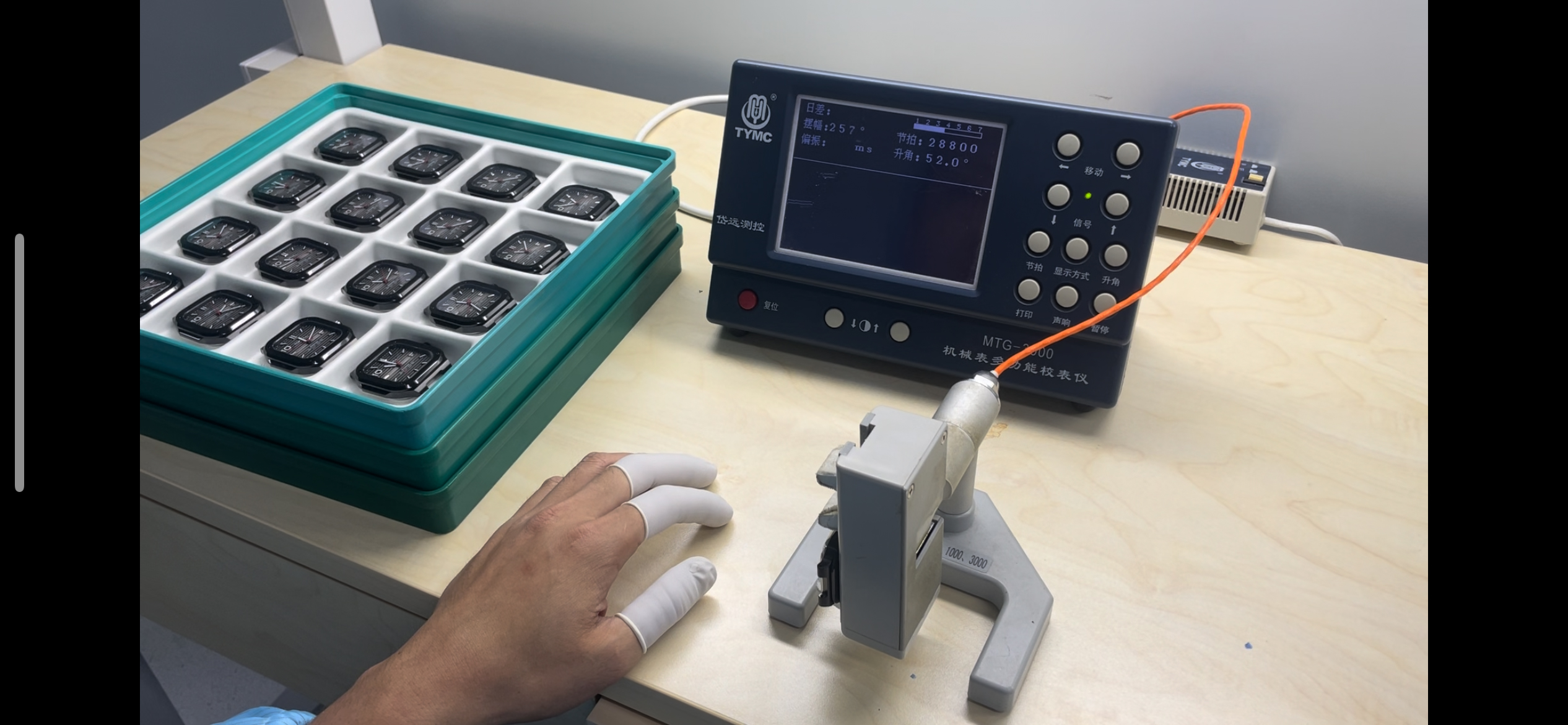
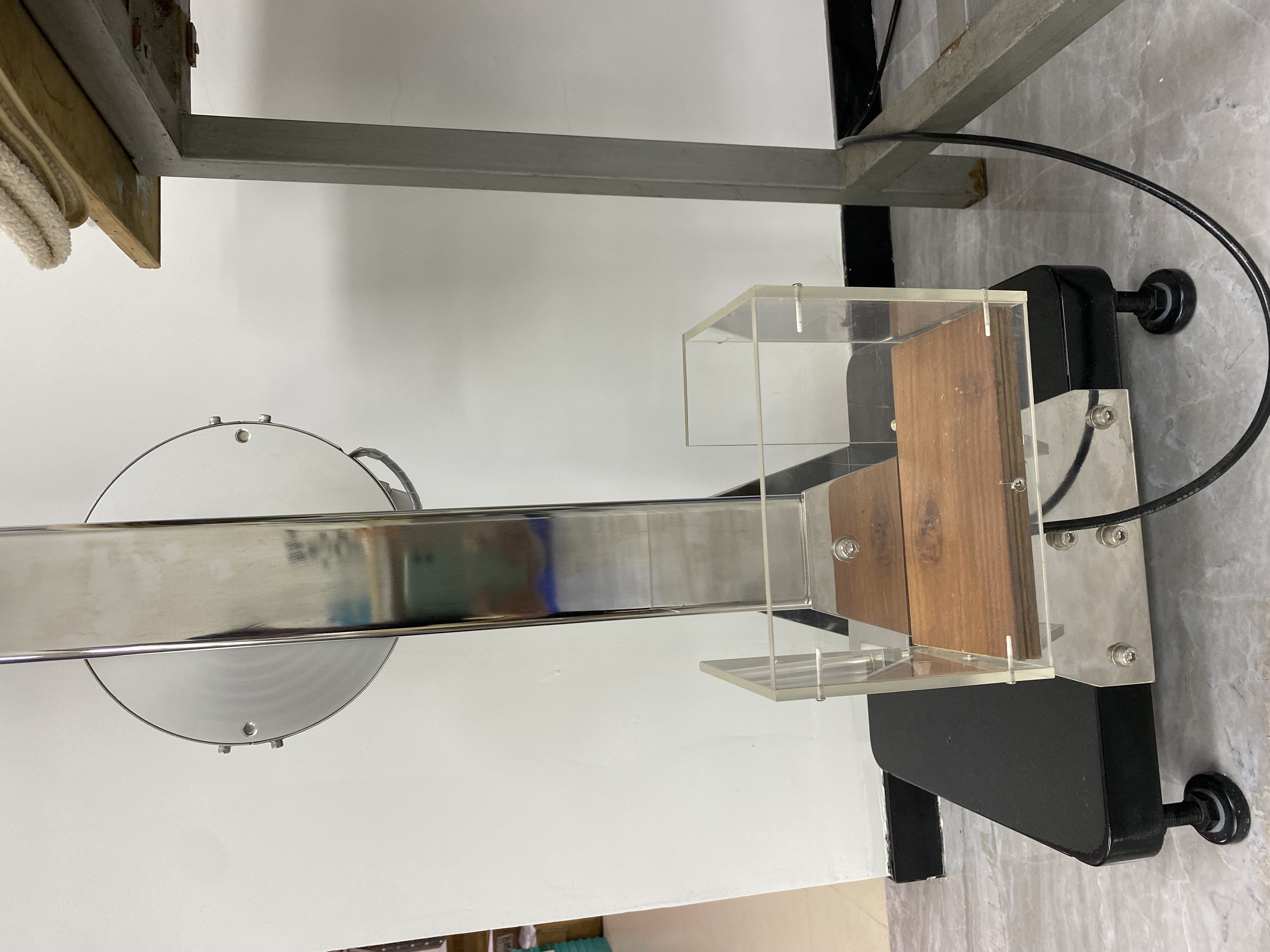
Two management-system certifications are stated: ISO 9001 for quality management and ISO 14001 for environmental management. The testing commitment is 100% testing as part of quality control — every unit, not a sample lot. For water-resistant models, every watch is pressure-tested before shipment rather than randomly sampled, across a supported range of 5–50 ATM. Ask for the records that prove the 100% claim at the volume you are ordering; a testing statement without retrievable records is a marketing sentence.
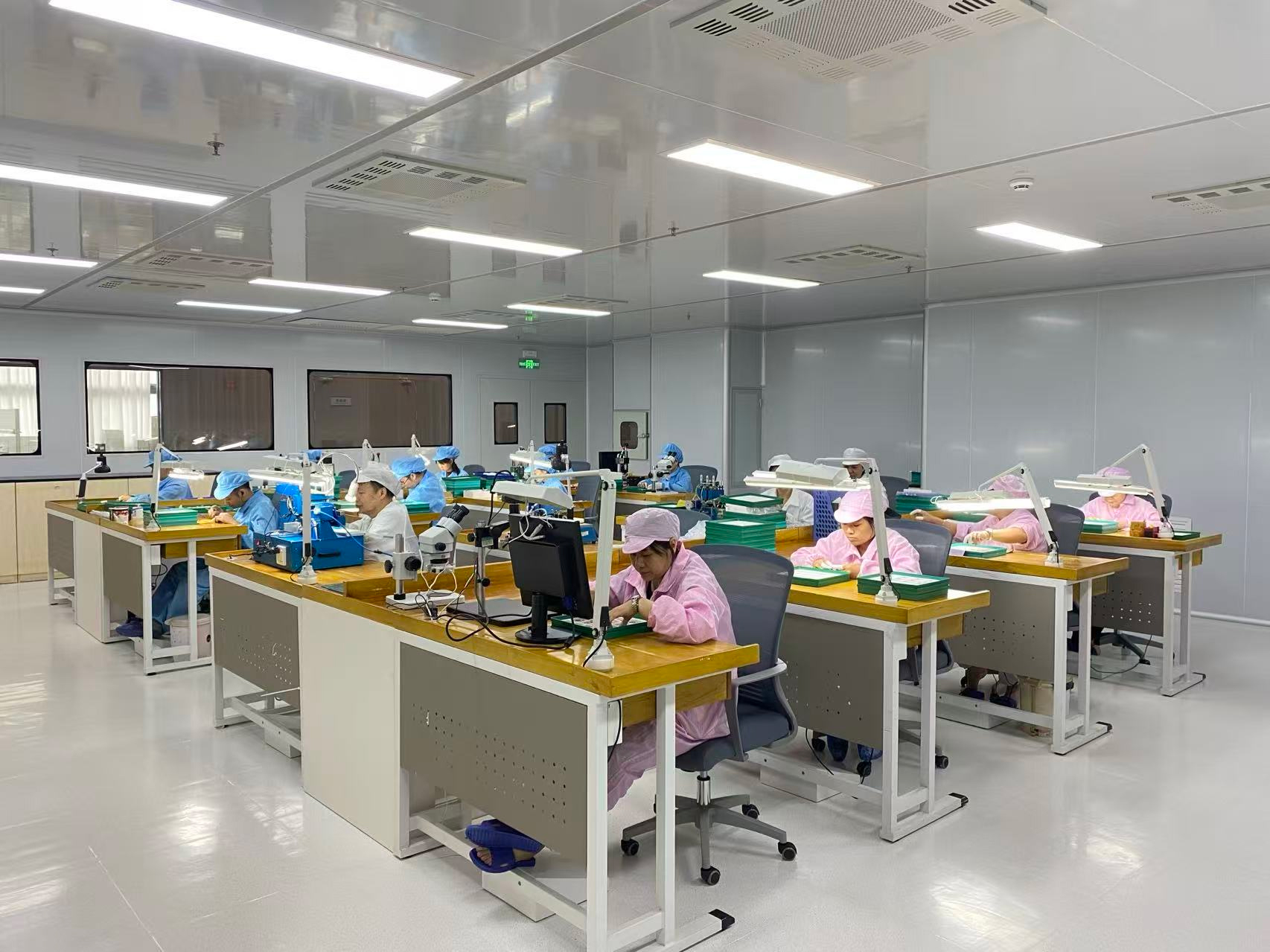
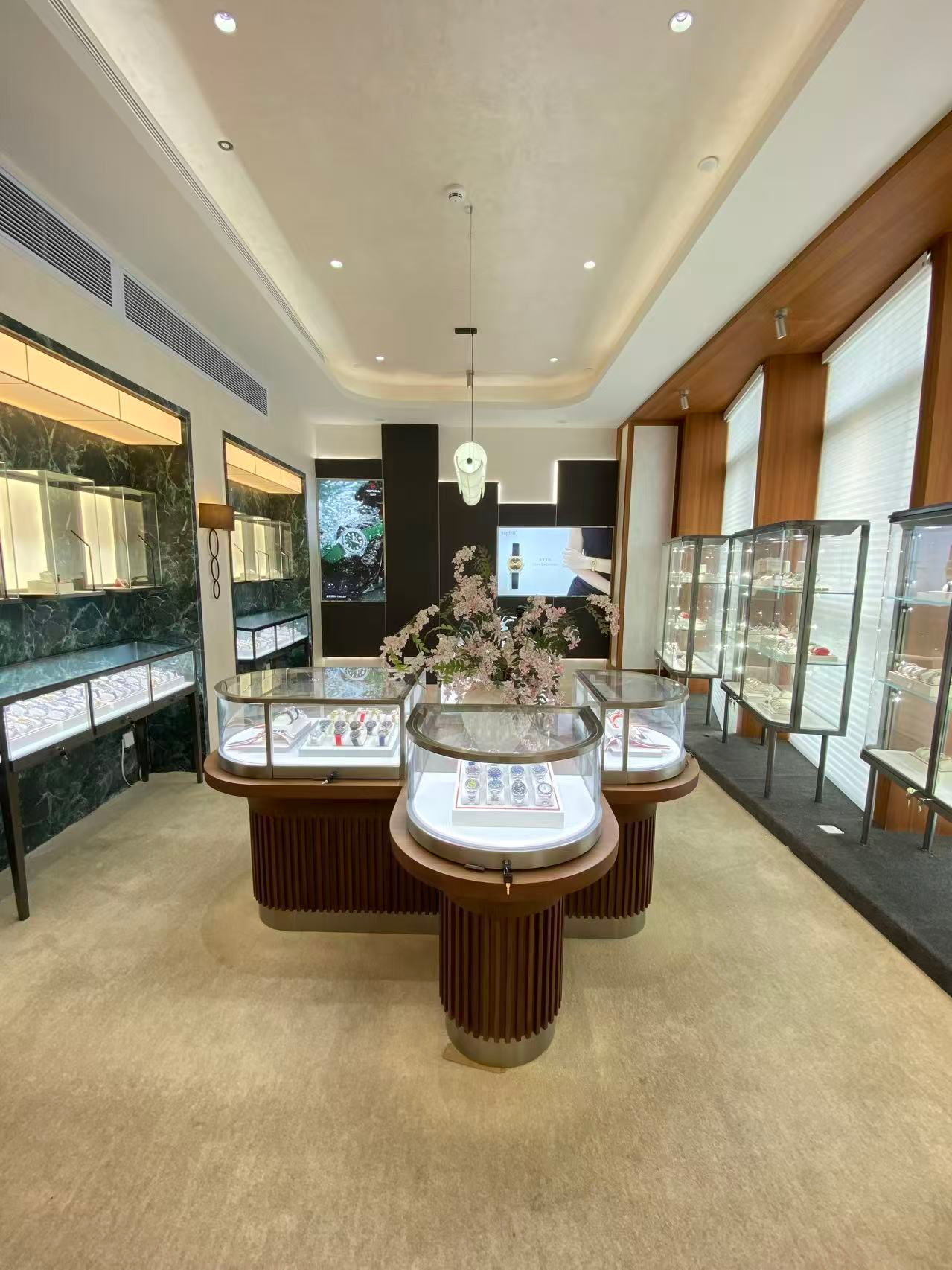
Facility evidence belongs at this step as well, because it explains why the testing claim is plausible: a 1,500 m² manufacturing site with a class-10,000 dust-free assembly workshop, a dedicated high-efficiency CNC prototyping workshop and a full suite of high-precision inspection and testing instruments. More than 15 core staff hold over 15 years of watch-industry experience, which is relevant to the one thing scale cannot fix — the judgement applied at first-article approval.
Step 4 — Read the compliance scope line by line
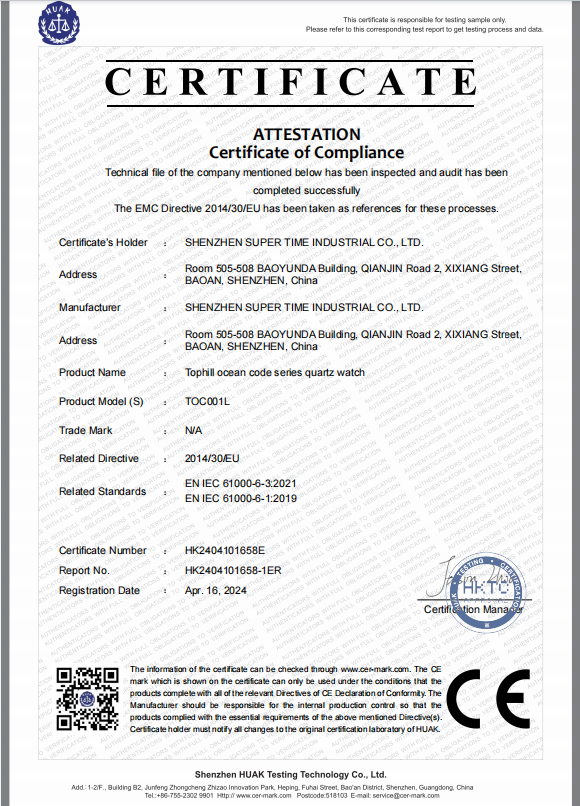
EU RoHS compliance is stated for finished products, which addresses the substance-restriction requirement for electronic watches sold into the EU. The CE certificate on file — certificate HK2404101658E, issued by HUAK on 16 April 2024 under the EMC Directive to EN IEC 61000-6-3:2021 and EN IEC 61000-6-1:2019 — carries a specific and narrow scope: the Tophill ocean code series quartz watch, model TOC001L.
That certificate supports that model. It does not, by itself, cover a diving watch, a chronograph, a solar-powered model or a new case design. A buyer scaling a product family must request the certificate that matches each model and each destination market, and should treat any supplier that presents one certificate as covering a catalogue as an unresolved risk rather than a convenience.
Step 5 — Gate the scale-up on the pilot, not on the promise
Use the 500-piece run to lock first-article approval, packaging specification, test documentation and the reporting format you expect at volume. Release Band 2 only when the Band 1 documentation arrives complete and on time; release Band 3 only when a phased schedule with named sub-batch release points has been agreed in writing. Two years of after-sales support is stated and should be written into the same document, because the warranty obligation is the part of a large program that outlives the production window.
Evidence Map: Matching Claims to Verifiable Records
| Capability claim | What to request | Reference point from published data |
|---|---|---|
| Trial production from small batches | MOQ confirmation; pilot line allocation | MOQ 300 pcs; trials from 500 pcs |
| Volume throughput | Monthly loading plan; current order-book share | 50,000–60,000 units per month |
| Large program delivery | Phased schedule with sub-batch release points | 400,000 units annual output; batches over 500,000 units supported |
| Quality consistency | ISO 9001 certificate; 100% test records at your volume | ISO 9001; 100% testing |
| Environmental management | ISO 14001 certificate | ISO 14001 |
| EU market access | RoHS statement; CE certificate matched per model | RoHS-compliant finished products; CE HK2404101658E (model TOC001L) |
| Water resistance | Per-unit pressure test records | 5–50 ATM; 100% pressure testing before shipment |
| Development capability | Prototype samples; CAD and structural review | 4 designers and 3 engineers; CNC prototyping workshop |
Where This Evaluation Pays Off: Three Buyer Scenarios
A brand launching a private label line at 500–1,500 units. The risk here is over-buying credibility. The pilot exists to prove documentation quality, not to test the factory's ceiling. Evaluate the 500-piece run against the same checklist you will use at 30,000 units, so the comparison is meaningful later.
A distributor scaling a proven model to 10,000–30,000 units. Here the operative question is loading share. Ask what percentage of 50,000–60,000 monthly units your order represents, and whether the 100% testing regime covers your batch or only the model family in general. This is also the band where water-resistance scope matters commercially: a diving sports line at 20 ATM and above carries a higher after-sales exposure than a 3–5 ATM daily-wear line, and the testing evidence should reflect that difference.
A corporate or retail program exceeding 50,000 units. At this scale the contract is a schedule, and the supplier's annual output figure becomes the constraint to plan around rather than a headline to admire. Sub-batch release, agreed inspection points and a documented escalation path matter more than a lower unit price.
What This Evidence Does Not Prove
- Capacity figures are stated, not audited. Monthly and annual output numbers describe the supplier's own baseline. They must be paired with current order-book context to tell you what is available to you.
- The CE certificate covers one model. Certificate HK2404101658E applies to model TOC001L. Assuming catalogue-wide coverage is a compliance error, not an optimism.
- Cumulative volume proves longevity, not availability. More than 20 million finished watches produced since 1992 shows process maturity; it says nothing about spare capacity next quarter.
- Water resistance is not permanent. A passed pressure test describes a laboratory condition at a point in time. Sealing gaskets age with wear, impact and chemical contact, which is why the term "waterproof" is not used in ISO 22810 terminology.
- The 75-day lead time is typical, not guaranteed. It must be re-confirmed against a specific configuration, movement choice and volume band, and for large programs it is superseded by the phased schedule.
FAQ
Which compliance documents should a Chinese private label custom wristwatch OEM provide before a trial order?
Three groups. First, management-system certificates: ISO 9001 for quality management and ISO 14001 for environmental management. Second, market-access documents for your destination: a RoHS statement for electronic watches sold into the EU under Directive 2011/65/EU, and a CE certificate whose declared scope names your model — for example, certificate HK2404101658E covers only the Tophill ocean code series quartz watch, model TOC001L. Third, test documentation: records showing 100% testing as part of quality control, and per-unit pressure-test records for water-resistant models, where the supported range is 5–50 ATM. Ask for the scope line, not just the certificate.
Can one manufacturer handle both a 500-piece trial and a 500,000-unit program?
Yes, but the two are governed by different mechanisms. Trial runs are supported from 500 pieces upward against an MOQ of 300 pieces, and the constraint at that scale is documentation quality, not capacity. A program exceeding 500,000 units is constrained by scheduling: with a stated annual output of 400,000 units and monthly capacity of 50,000–60,000 units, such a program necessarily spans more than one annual output cycle and must be structured as phased sub-batches. A buyer should therefore test the supplier on schedule design, not on the willingness to accept the order.
What design and engineering support should come with a private label program?
The stated R&D resource is 4 designers and 3 engineers, supported by a dedicated CNC prototyping workshop, which is what allows a design concept to be converted into a physical prototype before tooling decisions are locked. More than 15 core staff hold over 15 years of watch-industry experience, which matters most at first-article approval and structural optimisation. Buyers should confirm in writing how much design work is included at the trial stage and what happens to the prototype files after approval.
What are the standard commercial terms for a custom wristwatch order?
The published terms are an MOQ of 300 pieces, FOB delivery, a 30% deposit on order confirmation with the 70% balance before shipment, and acceptance based on pre-shipment testing. After-sales support is stated at two years. Unit pricing is not published because it depends on movement choice, case material, water-resistance rating and finish, so a quotation should always be requested against a written specification rather than a product category.
How should a 500-piece trial run be structured and evaluated?
Define acceptance before production starts. The trial should confirm four things: first-article approval against the approved design, packaging and labelling accuracy, retrievable test records covering the 100% testing claim, and — for water-resistant models — per-unit pressure-test results across the specified ATM rating. Evaluate the paperwork as strictly as the watches: a pilot that produces good samples but incomplete documentation is a warning about the 30,000-unit order, not a success to be repeated at scale.
What lead time should be planned, and when does it change?
The stated typical lead time is 75 days. That figure should be re-confirmed against the specific configuration and volume band, because at large volumes the binding constraint stops being production time and becomes scheduling. For programs above the monthly capacity band, plan from a phased schedule with defined sub-batch release points rather than from a single delivery date, and align payment milestones to those release points instead of to one shipment.
Conclusion
A custom wristwatch supplier is qualified at a specific scale, not in general. The evidence that matters is cumulative and band-specific: a 300-piece MOQ and 500-piece trial capability prove the process exists; 50,000–60,000 units of monthly capacity with 100% testing proves throughput can be sustained; a 400,000-unit annual output and a documented ability to run batches beyond 500,000 units prove a plan can be built, provided it is phased. ISO 9001, ISO 14001, RoHS-compliant output and a CE certificate with a named model scope convert those claims into checkable records — as long as the buyer reads the scope line as carefully as the certificate number.
The evaluation does not require trust in any single figure. It requires arithmetic in months, a compliance check per model, and a pilot gate that only opens when the documentation is complete.
Planning a program across the 500-piece and 500,000-unit bands? Review the full manufacturing, certification and testing profile in the company brochure, or discuss a phased schedule with Dongguan Xizhong Watch Innovation Technology Co., Ltd. (TOPHILL).
Have Questions or Need More Details?
Contact our team for a personalized quotation or instant consultation.
Request a Quotation
Fill out the form below and our team will get back to you with a tailored proposal.
WhatsApp Direct Chat
Prefer to chat in real-time? Message us on WhatsApp for instant assistance & quick answers.
- Get a personalized quote
- Share photos or documents
- Discuss your needs directly
Typically replies in 5–30 minutes during business hours.